
When regulation meets reality: how working in claims management inspired my law journey
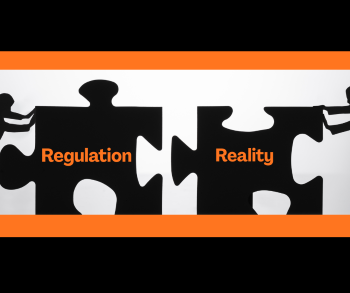
My journey into law didn’t start in a lecture hall, it began in a busy claims management office. I hadn’t yet opened a textbook or drafted a contract. Instead, I was helping people challenge banks and credit providers over mis-sold products and poor service. What began as a job and monthly wage, quickly became an education, and ultimately the reason I decided to study law with The Open University.
Finding law in everyday life
Working in claims management exposed me to law long before I ever enrolled on a module. Every complaint letter, every credit agreement, and every Financial Ombudsman case file was steeped in legal principles, contract, misrepresentation, consumer protection, and regulatory oversight.
At first, the statutes and regulations were overwhelming. The Consumer Credit Act 1974, Misrepresentation Act 1967, and Consumer Rights Act 2015 appeared in almost every case we handled. These weren’t just words on a page, they were the foundation of our clients’ rights. Translating those rights into successful outcomes required the same analytical, problem solving and evidential skills that law students are taught. They are just learned through practice instead of lectures.
The more I worked with these rules, the more curious I became about the wider system behind them, how laws are made, how regulators and banks interpret them, and how ordinary people can use them to challenge injustice. That curiosity led me to The Open University’s Law School, where I could explore the theory behind the laws I was already applying.
Regulation in practice
The claims management industry is one of the most regulated sectors in the UK. Since 2019, the Financial Conduct Authority (FCA) has been responsible for overseeing Claims Management Companies (CMCs) (FCA, 2019). This brought CMCs firmly into the world of financial services compliance.
Suddenly, firms like ours were expected to meet the same standards as lenders, which included strict record-keeping, transparent fee structures, and constant audits. On paper this ensures consumer protection and prevents misconduct. In reality it creates an intricate compliance burden that can be difficult for small firms like ours to navigate.
At times, it can feel as though both the FCA and the Solicitors Regulation Authority (SRA) view CMCs with suspicion, with each of them guarding their own regulatory perimeter. The FCA wants to prevent unauthorised legal work and the SRA wants to prevent unregulated claims handling.
This tension was clear in the FCA’s 2023 review of Claims Management Companies, which found that ‘many CMCs failed to undertake adequate due diligence on the firms or individuals they referred claims to,’ warning of ’poor practices and potential consumer harm’ (FCA, 2023a). Similarly, the SRA’s 2024 Warning Notice cautioned solicitors about working with unregulated introducers and ‘referral arrangements that blur the line between legal work and claims management’ (SRA, 2024).
Yet caught in the middle are genuine companies trying to help consumers access redress for mis-sold financial products, unsafe home improvements, or unfair contractual terms.
Why CMCs still matter
Despite the regulatory tension, I believe CMCs hold an important place in society. Many consumers do not fully understand their rights of lack the time and confidence to pursue complex complaints alone. Large banks have specialist compliance teams, while most individuals face automated replies and unclear processes
Financial Ombudsman Service research shows 71% of consumers who would use a CMC did so because they believed it increases their chances of success, 38% felt the process is too complex to handle alone, and 18% lack the time (FOS, 2025). These figures show that CMCs exist not because people are careless, but because the complaints but because complaint procedures can be overwhelming.
Claims management bridges that gap and supports access to justice for people who might otherwise give up. The FCA’s mission statement emphasises ensuring a ‘fair, effective and transparent financial market where consumers are protected’ (FCA, 2023b). Similarly, the SRA’s Principles require firms to uphold public trust in legal services (SRA, 2023).
In that sense, both regulators and CMCs share the same goal, even if they sometimes disagree on the route to get there. Having seen firsthand how an ethical CMC can change outcomes for clients, I now view regulation not as an obstacle but as an essential safeguard That protects both consumers and legitimate businesses.
From compliance to curiosity
Working under the FCA’s rulebook also changed the way I viewed law itself. Each update and new section of the FCA Handbook, revealed the living nature of regulation and how law adapts to new markets and technologies (FCA, 2024).
I wanted to understand not just what the rules said, but why they existed and how they evolved. The Open University’s flexible structure made it possible to study modules like W211: Public Law and W212: Contract Law alongside my full-time job. Reading about statutory interpretation one evening and applying it to a real client’s dispute the next morning created a continuous learning loop that no classroom alone could offer.
Lessons beyond the handbook
If working in claims management taught me anything, it’s that law is not confined to courtrooms, it lives in the details of everyday transactions. I’ve seen how a single clause in a finance agreement can determine whether a family is refunded thousands of pounds or left with an unmanageable debt.
I’ve also learned that regulation, while sometimes frustrating, is fundamentally about fairness. It ensures transparency, prevents exploitation, and keeps consumer redress accessible. In my view, that makes compliance work one of the most meaningful forms of legal practice, even if it rarely makes headlines.
Looking ahead
My decision to pursue a legal career grew out of seeing the system from the inside. The successes, the setbacks, and the ongoing dialogue between regulators and practitioners. CMCs may operate under scrutiny, but they play a real role in delivering justice on a human scale.
As I progress through my studies, I hope to continue bridging that gap between law in theory and law in action by bringing together the analytical discipline of legal study and the grounded perspective of regulatory practice.
Because when regulation meets reality, law stops being an abstract subject and starts becoming what it was always meant to be. A framework for fairness in everyday life.

Suzanne Burnett
Suzanne works in consumer claims and financial-services compliance while studying Law (LLB) with The Open University.
Her work focuses on Section 75 consumer-credit claims, regulatory due-diligence processes, and access to justice within the regulated claims sector.
References
Financial Conduct Authority (FCA) (2019) Claims management companies – how we regulate you. Available at: https://www.fca.org.uk/firms/claims-management-companies (Accessed: 7 November 2025).
Financial Conduct Authority (FCA) (2023a) Claims Management Companies: Portfolio Letter. London: FCA. Available at: https://www.fca.org.uk/publication/correspondence/claims-management-companies-portfolio-letter-2023.pdf (Accessed: 7 November 2025).
Financial Conduct Authority (FCA) (2023b) Our Mission. Available at: https://www.fca.org.uk/about/the-fca/our-mission (Accessed: 7 November 2025).
Financial Conduct Authority (FCA) (2024) FCA Handbook Online. Available at: https://handbook.fca.org.uk/handbook (Accessed: 7 November 2025).
Financial Ombudsman Service (FOS) (2025) Policy Statement – Charging Professional Representatives. London: FOS. Available at: https://www.financial-ombudsman.org.uk/files/324553/Charging-professional-representatives-Policy-statement.pdf (Accessed: 7 November 2025).
Solicitors Regulation Authority (SRA) (2024) Warning Notice: Marketing your services to members of the public. London: SRA. Available at: https://www.sra.org.uk/solicitors/guidance/marketing-public/ (Accessed: 7 November 2025).
Solicitors Regulation Authority (SRA) (2023) SRA Principles and Codes of Conduct. Available at: https://www.sra.org.uk/solicitors/standards-regulations/ (Accessed: 7 November 2025).
Misrepresentation Act 1967 (c 7)
Consumer Credit Act 1974 (c 39)
Consumer Rights Act 2015 (c 15)
Get in touch


Explore

Undergraduate
Postgraduate
Policy
-
Follow us on Social media
-


