
The trial without the bureaucracy
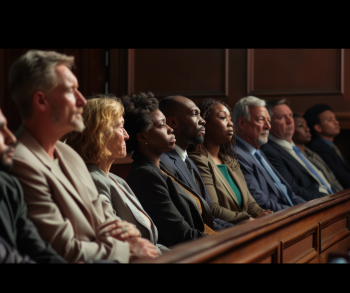
Will abolishing jury trials for one in four cases cause more problems than it solves?
The Deputy Prime Minister, David Lammy, calmly addressed the House on 2 December 2025 with some ‘bold’ new reforms… and ‘bold’ they were.
The most headline-grabbing of these reforms is the proposal for new ‘swift courts’, aimed at removing a defendant's right to a jury trial when accused of offences which come with a sentence of three years or less. The stated reason for this reform is to deal with the rather large backlog of unheard criminal cases (almost 80,000 as of 18 December, according to the BBC ), and in doing so introduce a modern justice system that works for, not against, victims.
One that is faster, fairer and finally capable of giving brave survivors of crime the justice they deserve. . Is the idea of a modern ‘swifter’ court not better?
After all, I’ve been in a checkout line of 5 people, a traffic jam of maybe 50 or so, and, even a few unfortunate times behind 1,000 upset Scottish rugby fans as we suffer another defeat (until recently). I can only imagine what it's like to be in a backlog of 80,000 waiting for justice. The impulse to have it all made ‘swifter’ must be all-consuming. The impulse to dispense with the bureaucracy is overwhelming.
The need for Lady Justitia’s verdict to resolve the wrongs brought before her. However, there are two sides to the sword of our fair Lady, and this proposal has forgotten to sharpen them both. What about the rights of the accused to have the facts of their case scrutinised before assigning guilt? This is the place of juries, and I believe it should continue to be.
The criminal justice system is undoubtedly in crisis at the moment, and the desire to get a grip on the problem is the correct decision. The problem, which should be clear, is that cutting juries is not the solution, as set out by the House of Lords 9 months earlier. On 13 March 2025, the Lords published a report aimed at identifying the reason for the backlog in criminal proceedings. The House of Lords concluded the following:
- A greater number of cases being pursued, rather than being disposed of.
- A greater number of ‘ineffective’ trials.
- Fewer overall criminal barristers and solicitors.
- A 12% increase in time to complete a criminal trial (from 2019-2023).
- A decrease in the number of ‘sitting days’, which refers to the number of days a judge is expected to sit in court per year.
To ease these problems, the government committed to increasing the annual ‘sitting hours’ from around 85,000 to 110,000 in the years 2025-2026. This was accompanied by a promise of additional funding.
Jurors provide an indispensable role in separating the power of narrative from judges. It is the role of a jury to examine the facts brought to it and determine how the course of events in question transpired. The Judge administers legal consequences in line with the facts established by the jury. The story is in the hands of the jury, and the law is in the hands of the judge.
It is with reluctance that I refer to the ‘slippery slope’ fallacy; but, implementing a policy not recommended by the House of Lords to an institution which is already struggling with expediency, is it not possible that cases will be reduced to a question of sentencing, not a question of guilt? It seems to me that this policy can quite readily lead to a criminal justice system which only considers the circumstances of very serious crimes, leaving those seen as less serious as an exercise in expediency of convictions.
By removing the jury, you are empowering judges beyond what would be seen as fair. This has led to the English and Welsh Bar association stating, ‘[t]he curtailment of jury trials has predictable negative consequences, including undermining the public’s trust and confidence in our criminal justice systems’. The English and Welsh courts do not derive from a European-style civil law system, which doesn’t use the jury system, and there has been no word on what safeguards would be put in place to prevent administrative overreach.
As such, I think it is clear that this policy should be considered with the same political toxicity as the recent mandatory digital ID proposal. Which, thankfully, as of 14th January 26, have been declared an optional scheme after the overwhelming and warranted public backlash.
To conclude, the criminal courts are in crisis, but the solution is not to strip the accused of their rights to a fair trial, in the hopes of expedited convictions.
Justice delayed may be justice denied, but it shouldn’t be forgotten that justice rushed is no justice at all.

Lanyon Rowley
I am a first-year law student with the Open University and thoroughly enjoying both my Criminal and Tort law modules.
I am currently one of four chairs with the OU Debate Club, and I am looking forward to being part of the team which expands us into a society.
LinkedIn: https://www.linkedin.com/in/lanyon-rowley-267613203/
References
Get in touch


Explore

Undergraduate
Postgraduate
Policy
-
Follow us on Social media
-


