
Stronger together: teamwork can create connection and belonging

Saturday 3rd October 2026 dawned with an amazing sun rise in Yorkshire. The weather was, not too hot, not too cold, it wasn’t raining and there was just a slight breeze. An ideal day for a ride on a motorbike!
Once again, my partner and I joined over 6000 bikes from all over the UK and Europe to Ride to the Wall (RTTW) ( RTTW - Ride To The Wall). The wall we ride to is at the National Remembrance Gardens (formerly the National Memorial Arboretum) in Staffordshire and the ride is one of remembrance and reflection. For many this is an opportunity to remember service personnel who have lost their lives in service since the end of the Second World War. It is also an opportunity to raise money for the National Remembrance Gardens and meet like-minded people.
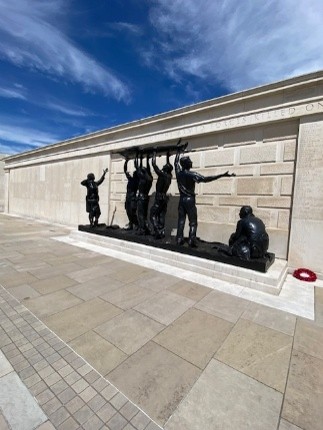
During the ride, as a pillion, I have ample opportunity to reflect. I often find myself thinking about belonging and the development of communities, which are important aspects of my role at The Open University. Common experiences can help people feel part of a community, and this can be the first steps towards feeling a sense of belonging. In the build-up to the event, bikes are cleaned, photos taken and shared on social media, Wallers (the name given to riders to the wall) reach out to see if anyone is riding from their town or village. All of these activities help build a sense of community. Once at the National Remembrance Gardens, bikes are parked and helmets taken off and we all head to the wall to hear speeches (always short and to the point). For those who wish to take part there is a short service of remembrance. One of the speakers is the founder of RTTW, Martin Dickinson. This year he spoke about the importance of remembrance and how the Waller community has grown from its small beginnings 19 years ago to the large and ever-growing community it is today. Central to that community is the shared purpose and collective experiences. Over the years, there have been some amazing experiences, not least those thrown at us by the weather!

Next year will be the 20th RTTW, a major milestone for any community. RTTW is run entirely by volunteers, who join together to ensure the event takes place, legally, safely and with minimal disruption to other road users. Behind the scenes is a team of people who work tirelessly to ensure this event happens. They ensure merchandise is sent out on time and that the 10 rides from across the country are led and marshalled professionally. This is an incredible team and shows how teamwork with a shared purpose can deliver amazing outcomes.
From forming to performing: helping students build effective teams
As a Student Experience Manager at The Open University, I am responsible for supporting students and enhancing their learning experiences on the Justice in Action module known as W360. This clinical legal education module, underpinned by experiential learning, requires students to work in small teams to produce a project output. The Open University is a large distance education provider and our students work online. This means our students not only have to navigate the challenges of group work but also those associated with studying and working in the online environment.
Teamwork is a key employability skill. There are very few roles in the workplace where you can avoid working with others. However, for many of us, teamwork is a skill that must be developed rather than one we naturally possess.
Teamwork can be defined as ‘the integration of individuals’ efforts toward the accomplishment of a shared goal’ (Mathieu et al., 2017, p. 458 cited in Kaelin et al 2024). For my students on W360, their shared goal is the production of a project output, the nature of which will depend on the project they are working on. To achieve this they must collaborate effectively, drawing on each other’s strengths to achieve the common goal.
New teams tend to go through several stages as they develop into a fully functioning group; some groups will never reach their full potential. Tuckman’s model of group work (cited in Kaelin et al 2024) suggests that group formation goes through a number of stages:
Stage one – Forming ➡️ Stage two - Storming ➡️Stage three – Norming ➡️Stage four – Performing
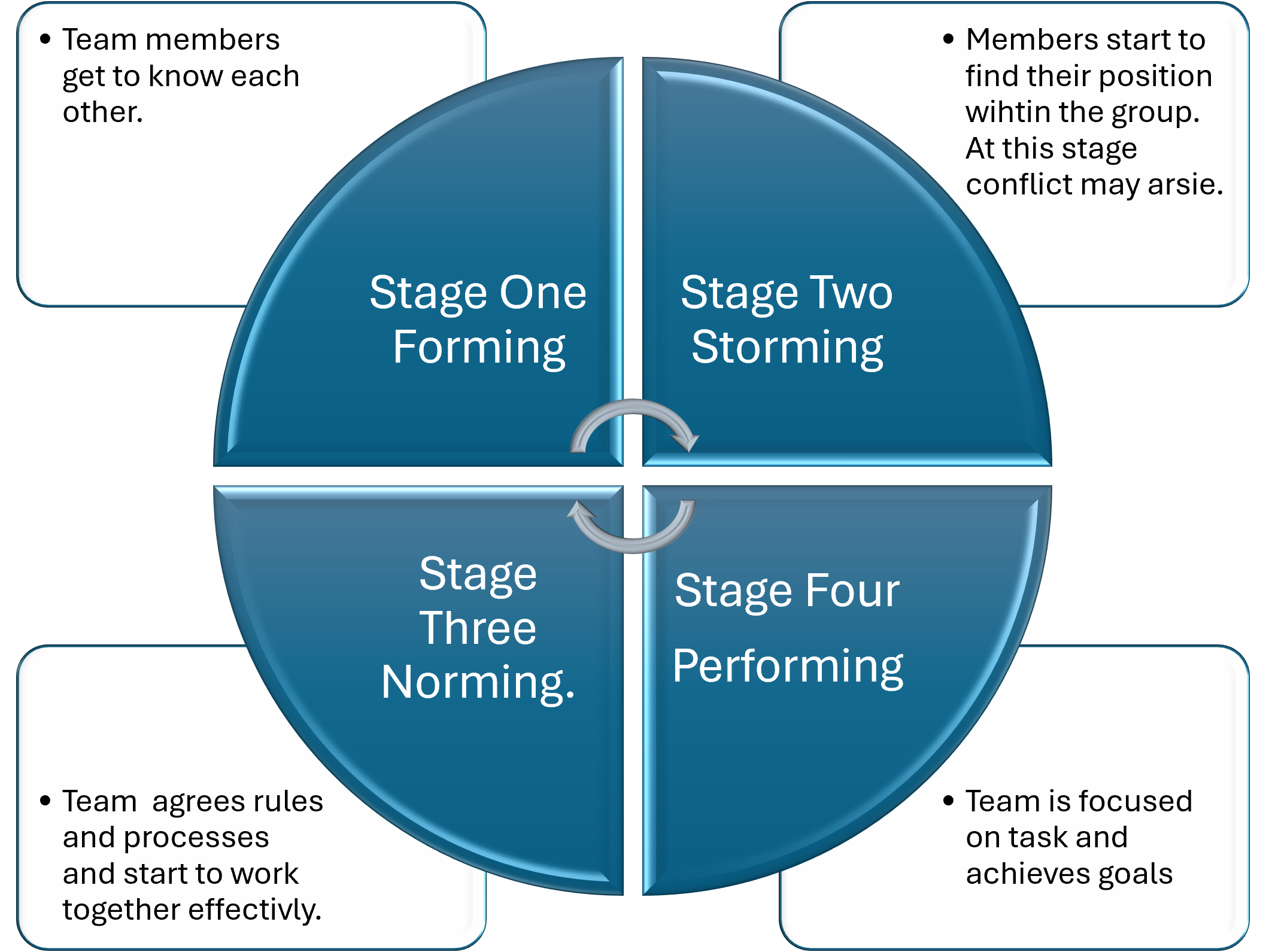
Figure One – Team formation stages (Tuckman 1965)
A final stage of adjourning was added later, here the groups reflect on their achievements and considers whether the objectives were met.*
Reflection on Tuckman’s model in action
Reflecting on this model, I can see these stages reproduced in the development of groups on W360. As I write, the students are getting to know each other, although some groups will move through this stage quicker than others. They will then progress to the Storming stage, this can be challenging as different personality traits and working styles come to the fore. Once they are at the Norming stage, they will need to agree how they will work together to become an effective team. To support this stage we ask our students, as part of their first assessment, to work collaboratively to draw up a team agreement. This document will clearly outline the expectations, rules and processes for working together and, hopefully, allow the students to swiftly move on to the Performing stage. All of our groups are successful in that they complete their projects but some of the outputs are amazing and deserve a blog of their own.
The ingredients of successful teamwork
Teamwork however goes beyond theories and can be aided by following some simple pointers for success.
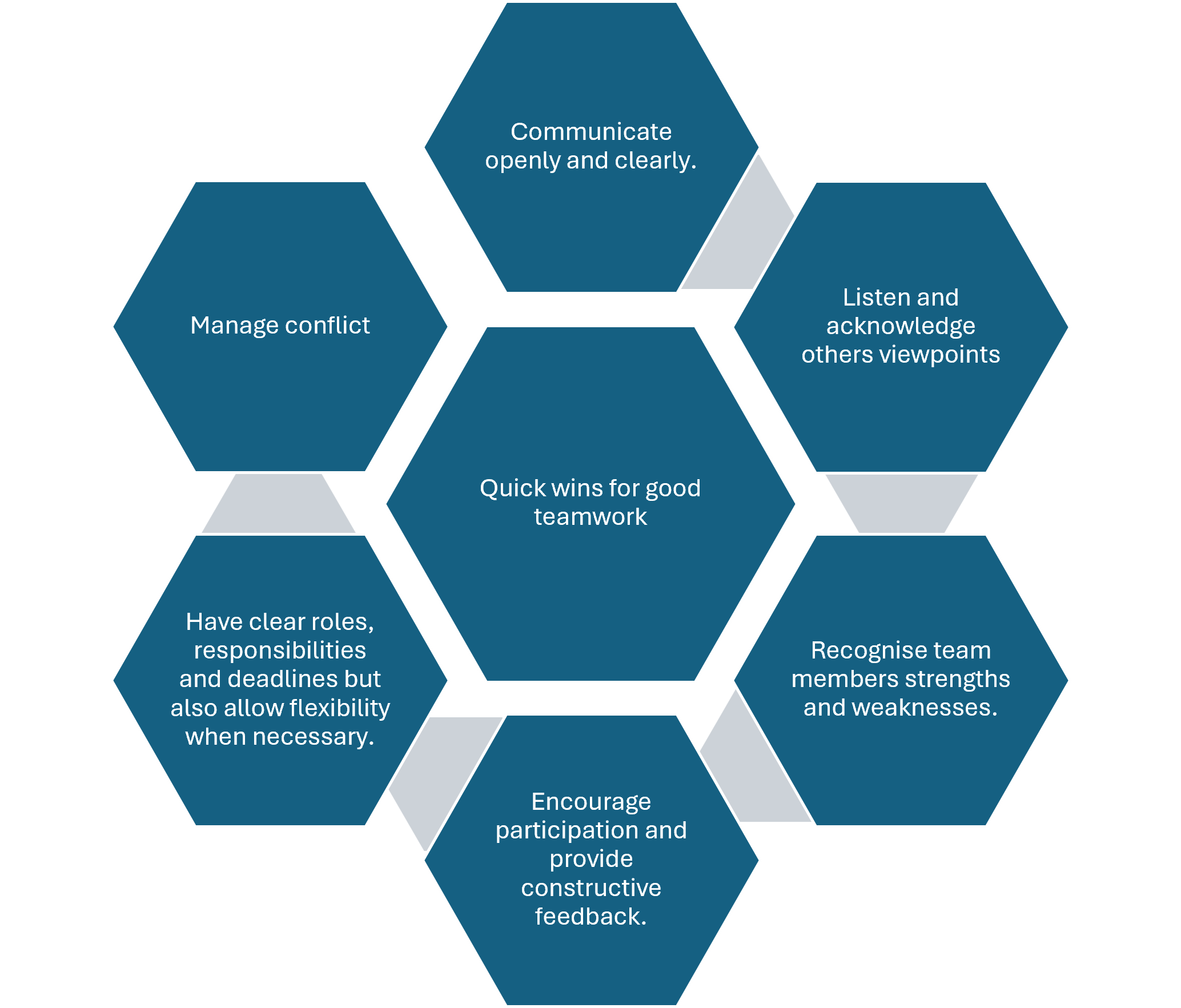
Figure Two – Quick wins for good teamwork.
The lasting value of teamwork
Teamwork is an important employability skill, and it is the responsibility for Higher Education institutions to facilitate opportunities for students to develop this skill. Working as part of a team allows the project to be realised at a much higher standard than might be achieved individually. It allows for greater creativity, draws on a wider range of skills and perspectives and can increase productivity. When effective it can result in a happier and healthier working environment.
However, the value of teamwork can go beyond the workplace, as demonstrated by the amazing volunteer team at RTTW. They not only plan and organise the event, thereby ensuring everybody has an enjoyable and meaningful shared experience. They also facilitate the opportunity to remember and raise funds for the National Remembrance Gardens. Through collaboration and effective teamwork amazing achievements are made possible. As demonstrated by RTTW, teamwork is not only an employability skill, but it is a means of creating connection and a sense of belonging.

Carol Edwards
Carol is a Senior Lecturer in Legal Online Pedagogy and Student Experience Manager, whose teaching is focused on providing authentic experiential learning experiences. She is actively involved in the scholarship relating to online teaching pedagogy and has presented and published on this area.
She has a very keen interest in tackling student and staff isolation and is actively involved in several projects attempting to address this area. These include the online mentoring programme, and The Belonging Project, with particular focus on developing student confidence. She is part of a pan-university team exploring belonging across The Open University.
Carol is a Senior Fellow of the HEA and a Founding Fellow of the Centre of Belonging in Education.
References
Kaelin VC, Tewari M, Benouar S and Lindgren H (2024) Developing teamwork: transitioning between stages in human-agent collaboration. Front. Comput. Sci. 6:1455903. doi: 10.3389/fcomp.2024.1455903
Tuckman, B. W. (1965). Developmental sequence in small groups. Psychol. Bull. 63, 384. doi: 10.1037/h0022100
Photo credits
©geevee 2026
Get in touch


Explore

Undergraduate
Postgraduate
Policy
-
Follow us on Social media
-


