
The Secret Santa chicken disaster (a.k.a. Chickengate)
For those of us who are newcomers to law, IRAC stands for Issue, Rule, Application, and Conclusion. It's the fundamental framework lawyers use to analyse legal problems systematically. You identify the legal issue, state the applicable rule or law, apply that rule to the specific facts, and reach a conclusion. Those already familiar with IRAC may recognise yourselves in what follows.
It's meant for serious legal analysis, questions like 'Has fraud been committed?' or 'Was there a breach of contract?', except now, I apply it to everything.
A friend mentions she got a great deal on a used car, and before she's even finished talking, I want to see the documentation she signed. My brain races: Issue: Potential misrepresentation under the Consumer Rights Act 2015? Rule: Seller must not make false statements. Application: What exactly did they promise? What's in writing? Conclusion: I need to review those documents immediately.
I have to stop myself from saying, 'I put it to you, that…' She just wanted to share her excitement. I turned it into a cross-examination.
And it gets worse.
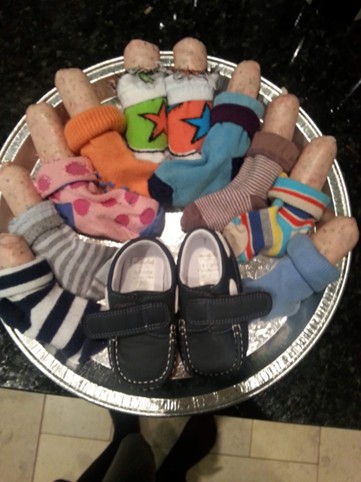
Last Christmas, I was invited to a party requiring an 'untoward' Secret Santa gift. Walking past the butcher, inspiration struck: I'll buy a chicken and put clothes on it. I also bought ten sausages and put socks on them.
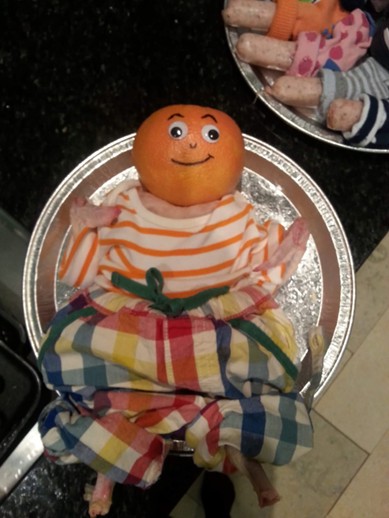
We dressed the chicken in my son's clothes, added an orange head, googly eyes, and a ballpoint-pen smile, and had it beautifully wrapped like a luxury spa hamper. The sausages got the same treatment.
As everyone grew excited about 'the hamper', I found myself sweating, thinking, 'Are there any psychiatrists here?'. The recipient opened it. Gasps of horror. Silence.
My husband mouthed, 'That was you, wasn't it?'
I confessed, 'There's another one, I'm just warning you…'
Even then, my brain ran the analysis:
IRAC analysis: the Secret Santa chicken
- Issue: Whether bringing a dressed raw chicken to a Secret Santa exchange constitutes acceptable gift-giving conduct under the stated 'untoward' requirement?
- Rule: Secret Santa operates under implied contractual terms requiring good faith participation. While 'untoward' gifts are expressly permitted, they must still meet basic standards of safety, good faith, and reasonable expectations of the parties.
- Application: The chicken objectively met the 'untoward' criterion, but the luxury spa wrapping created false expectations of value and desirability. Raw poultry poses hygiene concerns under food safety standards; the horrified response of a reasonable person in the recipient's position indicates a failure of the reasonable person test; and my anxiety prior to the reveal showed subjective boundary awareness. My spouse's immediate recognition suggests a pattern of questionable judgement.
- Conclusion: While technically compliant with the express 'untoward' requirement, the gift breached implied terms of reasonable participation and good faith dealing. Further recommendation: Don't dress up a raw chicken as a Secret Santa gift (I've cornered the market already).
This analysis illustrates what law school has done to me. I can't tell a story without contractual analysis. I can't hear about a car purchase without cross-examining.
Legal training colonises your brain. Every situation becomes an opportunity to identify issues, rules, apply them to facts, and reach conclusions. It's systematic. Thorough. Also probably exhausting for anyone having a normal conversation with me.
But despite this madness, I wouldn't change it. This is because studying law has given me something I'd always dreamed of: academic achievement. And I cannot wait for the day I put on the cap and gown.
I occasionally envision myself at home in the gown and wig with my 'no make-up make-up' look, declaring 'I put it to you…' at the mirror. Sometimes I invite friends to tell me something, then interrupt with 'I have no further questions, Your Honour.' It makes me laugh every time.
And when I need a break? I'll head back to Scotland and chat at the bus stop, where nobody expects an IRAC analysis of why the number 27 is late.
But I'll still be the person who cannot wait to wear that cap and gown—the walking, talking IRAC analyst who finally achieved her dream.
Note: My Secret Santa chicken now joins distinguished legal company. In Carter v. Kern High School District (Case No. S1500CV275395, Kern County Superior Court, 2016), attorney Nicholas Rowley actually wore a chicken costume during closing arguments to demonstrate what his client experienced, and won $10.5 million for him. If a chicken suit can work in a California courtroom, perhaps my dressed poultry wasn't quite so outlandish after all.
Carla Berryman

I've completed W111, now doing W112, and I've loved every minute—apart from the day I lost control of the versions of my TMA work on submission day.
Get in touch


Explore

Undergraduate
Postgraduate
Policy
-
Follow us on Social media
-


