
The role of International Law in global conflicts
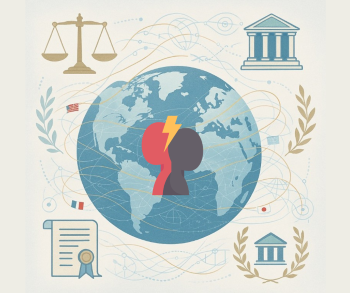
International law can often feel abstract, something that operates in distant diplomatic chambers or international courts, far removed from the realities of everyday life. Yet in a world where conflicts spill across borders and affect millions, it plays a crucial role in shaping how states behave, how disputes are resolved, and how human dignity is protected.
As a law student who cares deeply about fairness and global stability, I have come to see international law not simply as a technical field, but as a framework that aspires to bring order and humanity to some of the most difficult situations in global politics.
The purpose and structure of International Law
At its core, international law seeks to prevent conflicts and maintain order among sovereign states. It provides rules that regulate how states interact, and it offers mechanisms for resolving disputes without resorting to violence. The United Nations, created in 1945 after the devastation of the Second World War, remains central to this system. The UN Charter requires states to settle disputes peacefully and restricts the use of force to self‑defence or actions authorised by the Security Council (UN Charter, Arts 2(4), 51). This reflects a broader commitment to diplomacy and cooperation, even when tensions rise.
Institutions such as the International Court of Justice (ICJ) give states a neutral forum to resolve disagreements over territory, resources, or treaty interpretation (Klabbers, 2022). These mechanisms matter because they offer alternatives to armed conflict, especially for states that may lack political or military power. In this way, international law seeks to create a rules‑based order in which disputes are handled through legal processes rather than force.
Protecting humanity during conflict
International law does not disappear when conflict begins. International humanitarian law (IHL), grounded in the Geneva Conventions and their Additional Protocols, regulates how wars are fought and aims to protect civilians and others who are not taking part in hostilities. It prohibits deliberate attacks on civilians, torture, the use of chemical weapons, and the destruction of cultural heritage. Organisations such as the International Committee of the Red Cross (ICRC) play a vital role in monitoring compliance and delivering humanitarian assistance (ICRC, 2020).
Despite these protections, violations continue in conflicts such as those in Syria, Ukraine, and Gaza. The international outcry that follows these breaches shows that, even when the rules are broken, the world still recognises that war must have limits. This moral expectation is one of the strengths of IHL: it shapes global norms and reinforces the idea that human dignity must be protected, even in the worst circumstances.
Accountability and justice after conflict
Holding individuals accountable for atrocities is one of the most significant developments in modern international law. The International Criminal Tribunal for Rwanda (ICTR) and the International Criminal Tribunal for the former Yugoslavia (ICTY) demonstrated that those responsible for genocide, war crimes, and crimes against humanity could be prosecuted, regardless of their position. These tribunals paved the way for the International Criminal Court (ICC), which embodies the principle that justice should not stop at national borders.
However, accountability remains difficult. ICC prosecutions often face obstacles such as limited jurisdiction, lack of cooperation from states, and political resistance. The fact that ICC membership is voluntary means that some powerful states have chosen not to join, limiting the Court’s reach. These challenges highlight the tension between legal ideals and geopolitical realities. Yet even with these limitations, international criminal justice plays an important role in validating victims’ experiences, establishing historical truth, and supporting long‑term reconciliation.
Functions and limitations of International Law in global conflicts
International law seeks to maintain order by protecting state sovereignty and territorial integrity. It also aims to safeguard human rights through instruments such as the Universal Declaration of Human Rights, which affirms the inherent dignity of all individuals. Peacekeeping missions authorised by the UN can help enforce ceasefires, protect civilians, and create space for diplomacy.
However, the effectiveness of international law is often constrained by politics. Enforcement depends heavily on the willingness of states to comply. The five permanent members of the UN Security Council China, France, Russia, the United Kingdom, and the United States hold veto power, allowing them to block actions that conflict with their interests (Tams, 2023). This imbalance can lead to situations where powerful states avoid accountability while weaker states face consequences. The repeated use of vetoes during the Syrian conflict is a clear example of how geopolitical interests can undermine collective action.
Another challenge is the tension between humanitarian intervention and state sovereignty. Many states resist external intervention, even when serious human rights violations occur. This makes it difficult for the international community to respond effectively to crises, even when there is a strong moral case for action.
Modern conflicts also increasingly involve non‑state actors such as rebel groups, terrorist organisations, and private military companies. These actors do not fit neatly into the traditional state‑centric model of international law, making regulation more complex. Emerging technologies including cyber warfare and autonomous weapons raise further questions that existing legal frameworks are not fully equipped to answer. Addressing these challenges will require new thinking and legal innovation from the next generation of scholars and practitioners.
Peacebuilding and reconciliation after conflict
International law also plays a vital role once the fighting stops. Peacebuilding efforts rely on legal agreements, transitional justice mechanisms, and institutional reforms to help societies rebuild. Truth and reconciliation commissions can help address past atrocities, support victims, and prevent denial by establishing an authoritative record of what happened.
Post‑conflict legal frameworks strengthen institutions, promote accountability, and support long‑term stability (Paris, 2022). These efforts help transform fragile peace into sustainable development and cooperation. In this sense, international law contributes not only to ending conflict but also to rebuilding societies in ways that reduce the risk of future violence.
Conclusion
International law cannot prevent all conflicts, but it provides essential tools for justice, accountability, and peace. It sets standards for how states should behave, demands responsibility for wrongdoing, and reflects a shared belief that human dignity must be protected even in times of conflict. As a law student, I am inspired by a system built on cooperation rather than coercion. Its future depends on our willingness to strengthen, adapt, and defend it. Ultimately, international law is not just a technical discipline it is a moral project. It represents humanity’s ongoing effort to replace might with right, vengeance with justice, and chaos with peace. That mission remains as urgent as ever in a fractured world.
Sebastian Weir
Sebastian is a law student at The Open University who is passionate about international humanitarian law and peace studies. Through research and writing, he aims to promote awareness about how legal frameworks can protect human rights and foster global cooperation.
LinkedIn account: www.linkedin.com/in/sebastian-weir-534384203
References
- Tams, R. (2023). The Defence of Mistake of Law in International Criminal Law: A Study on Ignorance and Blame. Oxford University Press, Oxford. Available at: https://global.oup.com/academic/product/the-defence-of-mistake-of-law-i…; (Accessed: 11 November 2025).
- Paris, R. (2022). Reconciliation After Violent Conflict: Policy Summary. International Institute for Democracy and Electoral Assistance (IDEA), Stockholm. Available at: https://www.idea.int/sites/default/files/publications/chapters/reconcil… (Accessed: 10 November 2025).
- ICRC (2020) Accountability for Violations of the Laws of War. Oxford: Oxford University Press. Available at: https://academic.oup.com/oxford-law-pro/book/57867/chapter/471876666?lo…
- International Committee of the Red Cross (2025). Geneva Conventions and the law. Available at: https://www.icrc.org/en/geneva-conventions-and-law
- Klabbers (2022) Blackstone’s Statutes on Company Law, edited by Derek French. Oxford: Oxford University Press. Available at: https://global.oup.com/academic/product/blackstones-statutes-on-company…;
- United Nations, (1945) The Charter of the United Nations. Available at: https://www.un.org/en/about-us/un-charter
- Cassese (2021). Title of the Book/Chapter [online]. Cambridge: Cambridge University Press. Available at: https://www.cambridge.org/core/books/abs/conflict-refugees/legal-framew…
- Cassese A, International Law (3rd edn, Oxford University Press 2021)
- International Committee of the Red Cross, Annual Report 2020 (ICRC 2020)
- Klabbers J, International Law (3rd edn, Cambridge University Press 2022)
- Paris R, ‘Peacebuilding and the Limits of Liberal Internationalism’ (2022) 44 Review of International Studies 1
- Tams CJ, ‘The Security Council and the Politics of International Law’ (2023) 97 International Affairs 1123
- United Nations, Charter of the United Nations (1945)
Get in touch


Explore

Undergraduate
Postgraduate
Policy
-
Follow us on Social media
-


