
Law at the End of Anthropocene?

Can the legal system account for justice beyond the human? Should it? These are some of the provocative questions we have been grappling with in our respective research trajectories. Our current collaboration emerged from distinct but intersecting concerns – human rights, environmental degradation, legal personhood, and the evolving role of law in pluralistic societies. What we are finding is a shared unease with the traditional boundaries of legal thinking, and a growing interest in how environmental and indigenous perspectives might transform the legal lens altogether.
Professor Natalia Szablewska recently explored these issues in her keynote ‘Legal personhood: The evolution and implications of legal status across individuals, entities and nature’, presented at the Enabling Multispecies Transitions (MUST) annual consortium in Tampere, Finland. Dr. Wannette Van Eg Dom – Tuinstra spoke on ‘Sustainability and human rights of indigenous peoples’ at the University College Cork Environmental law conference in May 2025. Though distinct in scope, both presentations raised questions that resonate with current public debates on climate breakdown, biodiversity loss, civil unrest, and indigenous justice.
We are both legal scholars rooted in international human rights law – Natalia with a focus on business and human rights, and Wannette specialising in minority rights. Yet, increasingly, we find ourselves at the crossroads of disciplines and perspectives.
The legal academia and profession, still largely shaped by the Eurocentric legal traditions, often struggle to accommodate non-dominant conceptions of justice. Indigenous legal philosophies, particularly those grounded in reciprocal relationships with land, waters and nonhuman beings, challenge us to rethink foundational legal concepts such as personhood, sovereignty and property. For example, legal personhood has been extended to rivers in Aotearoa New Zealand, Colombia, parts of India, and is currently being debated in Poland for the Odra River, while in the United States, wild rice has been recognised as a rights-bearing entity by First Nations communities.
These are not merely symbolic gestures; rather, they represent practical legal innovations aimed at addressing ecological degradation and environmental injustice. Traditionally confined to areas like planning and resource management, environmental law is now emerging as a foundational lens through which to reconsider (and potentially reconcile) legal systems more broadly.
Much like the rise of human rights law in previous decades, environmental law increasingly permeates and reshapes a wide range of legal fields. From procedural law, seen most clearly in the global spread of ‘Rights of Nature’ instruments, to substantive areas, such as the nexus between disability rights and climate change, environmental thinking is becoming integral to legal reasoning across domains.
This integration is evident in two recent landmark decisions: the International Court of Justice (ICJ) Advisory Opinion on climate change, which affirmed that states have a legal obligation to protect the climate system and prevent climate change-related harm, and the earlier ruling by the European Court of Human Rights (ECtHR), finding that Switzerland’s climate change policies violated human rights by failing to adequately protect its citizens from the effect of climate change. These developments mark a critical shift, signalling the direction of future legal and policy frameworks in the environmental sphere.
Concurrently, our work interrogates who (or what) the law protects, and how. Drawing on empirical research and critical legal theory, we examine how nonhuman actors (animals, ecosystems, even corporations) are rendered (in)visible within legal frameworks, and how this affects the distribution of rights, responsibilities and harms. We recently addressed these complex intersections at the Sustainability Collaborative Conference at the University of Bristol, where we focused on how legal pluralism might provide a more regenerative foundation for sustainability. This current project builds on and further extends our individual expertise and earlier work in these areas.
Natalia’s research on multispecies justice explores how human rights law – now and in the future – might account for and accommodate non-human persons. More broadly, her work interrogates how corporate practices impact both human and nonhuman communities, pushing for accountability mechanisms that consider ecological and interspecies justice.
Grounded in her expertise of stateless people and divided nations, Wannette’s work draws on indigenous rights movements and the transformative ways in which communities resist, reinterpret, and reconfigure state law through their own ontologies and legal systems. She is particularly interested in how indigenous worldviews might be reshaping legal education, which in turn could lead dominant legal systems to become more inclusive and sustainable, with reflective processes and relational outcomes.
Here at The Open University Law School, researchers are exploring whether ecocide could be recognised as an international crime, alongside work on multispecies justice and the role of technology in sustainable development. For our students, we have also pioneered the undergraduate module W260 ‘International, Environmental and Space Law’, which reflects the rapidly evolving frontiers of legal enquiry. Our forthcoming Master of Laws also adopts a critical approach to the intersecting issues of human rights and environmental law, equipping students to engage with some of the most urgent challenges of our time.
At a time when mainstream headlines speak of ‘climate breakdown’, ‘ecological tipping points’, ‘democratic backsliding’ and ‘rising authoritarianism’, increasingly linked to environmental injustice, our legal frameworks must rise to meet the challenge. That means questioning what is considered ‘normal’ in law, who is recognised in law as deserving of rights, and who gets to decide.
We invite others – students, scholars, practitioners, and policymakers – to think innovatively: what might the law look like if planetary well-being were placed at its centre, recognising that individual and ecological futures are inseparably linked?
Useful links
European Court of Human Rights, Verein KlimaSeniorinnen Schweiz and Others v. Switzerland - Violations of the Convention for failing to implement sufficient measures to combat climate change. Application no. 53600/20 (ECtHR 09/April/2024)
International Court of Justice, Obligations of States in Respect of Climate Change (Advisory Opinion) Case No. 187 ICJ (23 July 2025)
Mancini, Clara and Szablewska, Natalia (2025). Multispecies Justice & Technology: Human-Centred Design Is Not Enough. In: The Just GLOBE Conference ‘Multispecies engagements and the more-than-human lens in environmental politics and governance’, 7 May 2025, The University of Helsinki, Finland
Szablewska, Natalia and Van Eg Dom – Tuinstra, Wannette (2025). Legal Pluralism Beyond the Anthropocene: Rethinking Inclusion for Regenerative Societies. In: The 10th Sustainability Collaborative Conference ‘Diversity and Inclusion for Sustainable Societies’, 11-12 September, The University of Bristol, UK
Szablewska, Natalia and Mancini, Clara (2025). Submission to the UN Working Group on Business and Human Rights on 'The Use of Artificial Intelligence and the UN Guiding Principles on Business and Human Rights'. UN
Szablewska, Natalia (2024). Legal Personhood: The Evolution and Implication of Legal Status Across Individuals, Entities and Nature. In: Enabling Multispecies Transitions (MUST) Annual Consortium, 6 Jun 2024, Tampere, Finland
Szablewska, Natalia and Mancini, Clara (2024). Are Nonhuman Animals Entitled to Dignity, Privacy and Non-Exploitation?: A Smart Dairy Farm of the Future. In: Rogers, Nicole and Maloney, Michelle eds. The Anthropocene Judgments Project: Futureproofing the Common Law. Oxon, UK and New York, USA: Routledge, pp. 39–58
Szablewska, Natalia and Mancini, Clara (2024). Multispecies Justice in the Entangled World: Towards Sustainable Development. Sustainability at The Open University. Milton Keynes: OU, p. 13
Szablewska, Natalia (2022). Business and human rights, modern slavery and sustainable development. Open University Law School Blog, The Open University
Szablewska, Natalia and Kubacki, Krzysztof (2017). Does the route to equality include Indigenous peoples? Oxford University Press Blog
Van Eg Dom - Tuinstra, Wannette (2025). Sustainability and Human Rights of Indigenous Peoples. In: Law and the Environment 2025: 21st Annual Conference, 01 May 2025, University College Cork, Eire
Van Eg Dom - Tuinstra, Wannette (2025). Options and Opportunities for Stateless, Divided Nations at the European Court of Human Rights. In: Belonging Lecture Open University Law School, 14 Apr 2025
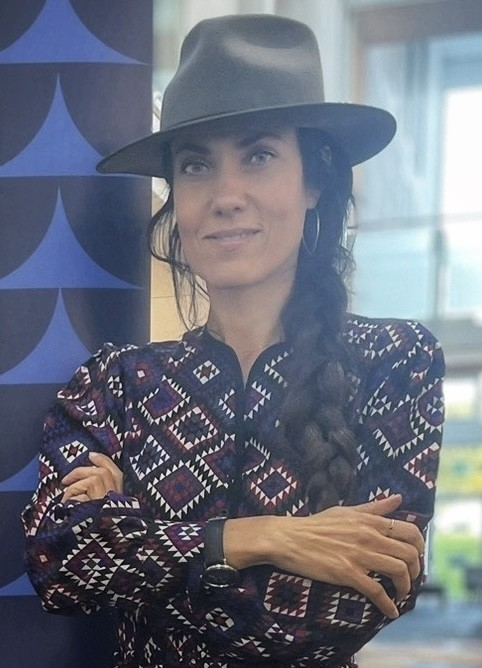
Professor Natalia Szablewska
Prof. Natalia Szablewska holds the Chair in Law and Society at The Open University Law School. She is a legal and social scientist specialising in business and human rights, with a focus on applying multispecies justice in this context, and in legal and regulatory responses to structural harm. Her interdisciplinary research has informed policy, practice and legal developments across diverse global contexts.

Dr Wannette Van Eg Dom – Tuinstra
Dr. Wannette Van Eg Dom – Tuinstra is the first Head of Equality, Diversity, Inclusion and Accessibility (EDIA) for the Faculty of Business and Law at The Open University. She specialises in European human rights with a particular focus on how the European courts can provide alternative dispute resolution to address minority rights, national self-determination and ethnic conflict.
Get in touch


Explore

Undergraduate
Postgraduate
Policy
-
Follow us on Social media
-


