
Colonialism isn’t over - it’s evolved!

When we imagine colonialism, we picture a distant past of empires claiming lands and imposing their will. But what if colonialism never ended? What if its core structures simply transformed, shaping our world under a new name: coloniality?
The definition of coloniality refers to the long-standing power patterns that emerged from colonialism but continue dictating labour, knowledge, culture, and identity long after direct rule ceased.
This blog post explores how coloniality, rooted in extraction and dominance, still influences crime, harm, and the state, particularly between the Global North and Global South. Through real-world examples, we examine how power, resource extraction, and racial discourses drive inequality today.
From colonialism to coloniality: The roots of global power
Coloniality is the continuous evolution of power dynamics forged during the colonial era, kick-started by rising globalisation in the late 15th century. This interconnectedness underscored a widening disparity between the Global North and Global South (Dimoue, E. 2020, p. 63). These terms refer not to geography, but to the systematic divide between powerful, economically wealthy countries and historically exploited, less powerful nations (Dimou, E. 2020, pp. 190-191).
Colonialism was about control. European powers expanded globally using force (Dimou, E. 2020, p. 64), justifying dominance through a ‘civilizing mission’ (Richard, D. 2018). Pseudoscientific theories like social Darwinism (Copson, L. 2020, pp. 190-191) and the eugenics movement (Copson, L. pp. 192-193) created a discourse positioning white Western Europeans as superior and non-white bodies as irrational and underdeveloped (Dimou, E. p. 202).
This fuelled racism and the dehumanisation of colonised peoples, enabling slavery and resource extraction. Commodities like sugar and tobacco drove global capitalism. Shipping sugar, for example, allowed foreign capital to shape the colonies’ economic and political scenes (Ortiz, 1947, cited in Dimou, E. 2020, pp. 65-66).
The four axes of power
Peruvian sociologist Anibal Quijano coined ‘coloniality’ to describe structures established during centuries of colonial rule (Dimou, E. 2020, p. 200). These persist today through four axes:
- Authority: Dominance in nation-states and institutions.
- Economy: Control over resources, labour, and land.
- Knowledge: Control over religion, science, philosophy, and epistemology.
- Subjectivities: Shaping how individuals think, feel, and relate — including racism and sexism.
Coloniality isn’t just a relic, it actively justifies state criminality and harm in the present.
Case study 1: Fossil fuels and ecocide in Puerto Rico
Puerto Rico (PR) has been under U.S. dominion for over a century, entrenching a dependent relationship (Atiles and Rojas-Páez, 2022).
Economic crises, natural disasters, and the COVID-19 pandemic have left the island vulnerable.
Enter the Applied Energy System (AES) coal-fired plant. Promised as a source of jobs, it instead brought environmental devastation.
- The harms: the plant produces over 300 million tons of toxic ash annually. Exposure is linked to pulmonary diseases, cancer, and fatalities (Atiles and Rojas-Páez, 2022).
- The corporate-state agreement: PR enacted Act 40 (2017). Lobbied by AES, it established a legal framework for continued ash dumping (Atiles and Rojas-Páez, 2022).
- The outcome: this demonstrates Fossil Imperialism (Jurema and König, 2025) and Ecocide (European Commission, no date). Legislative support allows AES’s harmful operations (Atiles and Rojas-Páez, 2022). As Llorens argues (cited in Atiles and Rojas-Páez, 2022), areas like Jobos Bay of PR become “sacrifice zones” where marginalized communities bear the cost.
Case study 2: Tobacco production and dependency in Malawi
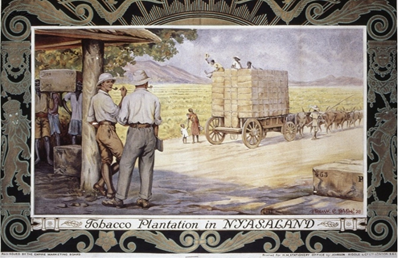
Malawi is the world’s leading tobacco producer, yet remains one of its poorest countries. This illustrates a debilitating dependency theory dynamic (Richard, 2018).
- Corporate control: two global corporations control the industry (Kulik, et al., 2017). When Malawi proposed price floors, these buyers refused to purchase until they were removed, forcing compliance (Kulik, et al., 2017).
- Debt cycle: tenant farmers take loans for supplies. Post-harvest sales rarely cover these debts, trapping many in poverty (Kulik, et al., 2017).
- Human cost: roughly 80,000 children work on tobacco farms. In addition to child labour and health risks, deforestation and pesticide use also constitute Ecocide (Kulik, et al., 2017).
- Aligning with Richard’s (2018) dependency theory, powerful Global North corporations impede post-colonial development by creating continual dependency.
Case study 3: Racial discourses and media representation
Control of knowledge and subjectivities is maintained through media (Martin, 2021). Relocating manufacturing creates a dynamic where the North holds capital and the South provides cheap labour (Martin, 2021).
- The distortion: transnational corporations minimize labour expenses. Western news ignores this structural issues, instead blaming poor conditions on internal Global South corruption or instability (Martin, 2021).
- The stereotype reinforcement: Global South countries are under-represented, appearing primarily in negative contexts like war. This creates global economic accountability, reinforcing colonial stereotypes that Global South populations are uncivilized and deviant (Martin, 2021).
Conclusion: Coloniality lives on Colonialism may be officially over, but its logic and power structures persist as coloniality. Operating through the economy, knowledge, subjectivities, and authority, coloniality continues to legally justify massive societal harm and exploitation.
Ultimately, the axes of coloniality are sustained by silence. The exploitation in Malawi and the ecocide in Puerto Rico are not lawless acts; they are entirely legal, sanctioned by corporate-state agreements. For the legal community, the path forward requires more than just awareness; it requires an active disruption of the status quo. Law schools must become spaces where the link between global corporate dominance and colonial history is exposed. As future practitioners, we must challenge the narratives that normalise this dependency, ensuring that the law serves as a shield for the vulnerable, not a sword for the powerful.

Alexandra Strohbehn
Alexandra is a criminology student with a passion for exploring diverse themes from a comparative perspective.
Having grown up in several countries, I bring a unique understanding of diverse cultures to my research in criminological concept.
I write about criminology concepts but often merge interdisciplinary topics into my blogs. Subjects are often inspired through events happening around the world, or from my own travels where I encounter thought provoking topics. https://www.thediaryofacriminologist.com
References
- Atiles, J. and Rojas-Páez, G. (2022) ‘Coal Criminals: Crimes of the Powerful, Extractivism and Historical Harm in the Global South’, British journal of criminology, 62(5), pp. 1289–1304. Available at: https://doi.org/10.1093/bjc/azac050 (Accessed 8 March 2025).
- Copson, L (2020) ‘Redrawing borders: crime, harm and the state’, in Copson, L., Dimou, E. and Tombs, S. (eds) Crime, harm and the state, book 2. Milton Keynes: The Open University, pp. 179–210. (Accessed 8 March 2025).
- Dimou, E. (2020) ‘Consuming drugs’, in Copson, L., Dimou, E. and Tombs, S. (eds) Crime, harm and the state, book 1. Milton Keynes: The Open University, pp. 47–76. (Accessed 8 March 2025).
- Dimou, E. (2020) ‘Where’s the harm in tourism?’, in Copson, L., Dimou, E. and Tombs, S. (eds) Crime, harm and the state, book 1. Milton Keynes: The Open University, pp. 181–214. (Accessed 8 March 2025).
- European Commission (no date) Environmental Crime Directive. (Accessed 26 May 2025).
Jurema, B., König, E. and Sultana, F. (2025) ‘State Power and Capital in the Climate Crisis: A Theory of Fossil Imperialism’, in Confronting Climate Coloniality. 1st edn. Routledge, pp. 62–77. Available at: https://doi.org/10.4324/9781003465973-5 (Accessed 8 March 2025).
Kulik, M.C. et al. (2017) ‘Tobacco growing and the sustainable development goals, Malawi’, Bulletin of the World Health Organization, 95(5), pp. 362–367. Available at: https://doi.org/10.2471/BLT.16.175596 (Accessed 7 March 2025).
Martin, V.C.S. (2021) ‘Dismissing class: Media representations of workers’ conditions in the Global South’, Nordicom review, 42(S3), pp. 35–55. Available at: https://doi.org/10.2478/nor-2021-0025 (Accessed 7 March 2025).
Richard, G. (2018) ‘On colonialism and development – why the underdevelopment of the South cannot be delinked from the experience of the past’, African Journal of Governance & Development, 7(1), pp. 6–16. Available at: https://library-search.open.ac.uk/permalink/44OPN_INST/j6vapu/cdi_proquest_journals_2272713287 (Accessed 7 April 2025).
Get in touch


Explore

Undergraduate
Postgraduate
Policy
-
Follow us on Social media
-


